
Learning the piano is not simply a matter of knowing which key to press next; for certain students it begins with a song that they like, while for others it is due to a wish to perform, to build a more solid musical foundation, or simply to get back to an instrument they had once played. Proper instruction can turn that first interest into a skill which then keeps developing for years.
Our piano lessons in New Jersey are designed to meet students where they are. Beginners can take their time with the fundamentals, while experienced players can work on technique, interpretation, and more demanding repertoire. There is room for different ages, personalities, and reasons for learning.
Children generally respond favorably to piano when the lessons offer a clear structure together with a small amount of freedom. If the lessons are too rigid, the music can come across as just another school assignment. Conversely, if there is not enough guidance, the child may not know what to practice.
Our piano Lessons in New Jersey introduce musical concepts progressively, helping young students become comfortable with the keyboard while developing coordination, rhythm, note recognition, and listening skills. Teachers can adjust activities according to age and attention span rather than expecting every child to progress in exactly the same way.
Parents exploring Piano Lessons for Kids can also find instruction focused on creating a strong musical foundation without losing the enjoyment that brought the child to the piano.
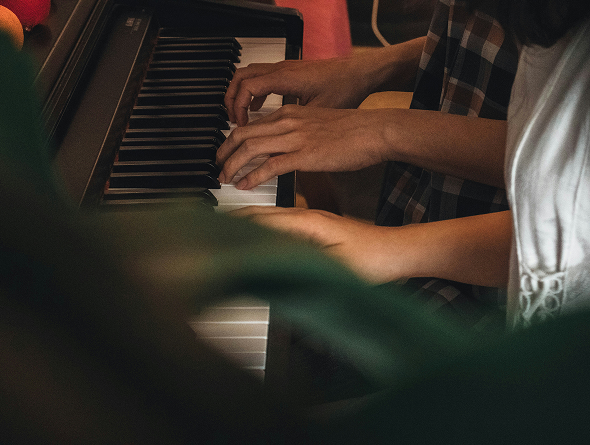
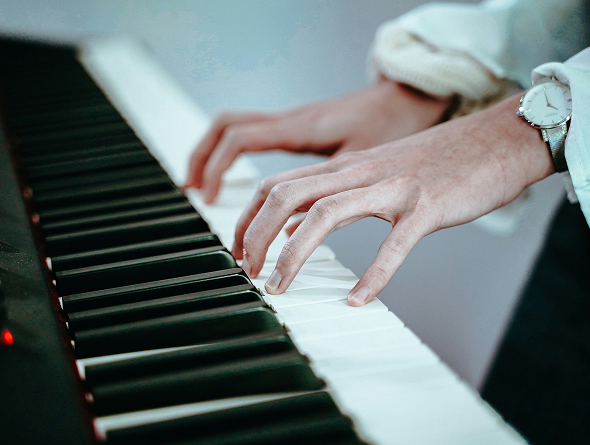
There are often very particular reasons why adults decide to learn. For example, one student might want to play classical music, another might wish to accompany a singer, and a third person might just want to learn an instrument which they never had time to learn earlier.
Piano lessons in New Jersey for adults can be adapted around those goals. Previous experience is helpful but not required. A student returning after twenty years may need a different starting point from someone who has been practicing regularly, even if both technically fall into the same age group.
Adults can also explore Piano Lessons for Adults when deciding which type of instruction fits their interests and schedule.
A piano course need not be the same for every student since progress is influenced by a number of factors such as experience, practice habits, confidence, musical interests, and the way a person takes in new information.
Our piano lessons in New Jersey can be adjusted as those needs become clearer. A student who initially struggles with reading music might spend additional time on notation. Someone who reads easily but lacks confidence at the keyboard may need more technical repetition and guided playing.
The objective is to achieve steady development, not to go through the checklist merely because a certain quantity of material is expected every month.
People need a friendly starting point with the instrument, and the first lessons should include topics such as the layout of the keyboard, finger numbers, posture, rhythm, basic notation, and simple melodies.
Just as much, students start to learn how to practice. Being aware of what to repeat, how slowly to begin, and when to move on can make practice a lot more productive. The small improvements tend to accumulate.
Although intermediate players have generally got past the basic mechanics, new difficulties do arise. A piece might be playable but still uneven. Sight-reading can seem slow. Some passages may keep on causing problems.
At this level, the lessons can be geared towards improving technique by also exposing the students to a more diverse repertoire. They can practice scales, chords, articulation, dynamics, pedaling, rhythm, and musical phrasing. The aim is to achieve greater control rather than just playing more difficult music.
Advanced students usually find it helpful to have detailed and specific instruction; at this level, a slight alteration in fingering or in articulation can have an effect on the whole passage.
The lessons can include work on an advanced repertoire, on performance preparation, on interpretation and on the refinement of technique, and students can get advice on how to organize their practice efficiently, in particular when they are preparing for auditions, recitals or other performances.
It is not necessary for all students to aim at the same goal. A few hope to receive formal musical instruction, while others are learning for their own sake. A teenager might wish to prepare for a performance, whereas an adult may just want to be able to play comfortably after work.
That flexibility is an important part of New Jersey piano lessons. Instruction can evolve as students discover what they enjoy and where they want to improve. Goals can also change. A student who begins casually may eventually become interested in more advanced study, while someone with ambitious plans may later decide that playing for enjoyment is enough.
In any case, the lessons should still be useful to the individual who is taking them.

The technique enables students to play both comfortably and accurately by giving them the necessary physical control. The instruction can cover such areas as posture, hand position, finger independence, scales, chords, coordination, and suitable technical exercises.
The aim is not to gather exercises but to enable students to use the keyboard with less unnecessary tension and more confidence.

Music theory enables students to grasp what they are seeing instead of viewing each page of music as merely a set of unconnected notes. The concepts involved may be rhythm, intervals, scales, key signatures, chords, dynamics, and musical symbols.
Sight-reading improves as this knowledge is acquired. By practicing the recognition of patterns and looking ahead, students find unfamiliar pieces less daunting.

The repertoire provides students with something specific to aim at. The pieces chosen can show what the students are able to do and what they are interested in, such as classical music, contemporary music, or other suitable works.
Expression is included in that process; students learn to take into account tempo, dynamics, phrasing, articulation, and tone so as to ensure that their playing communicates more than just technical accuracy.
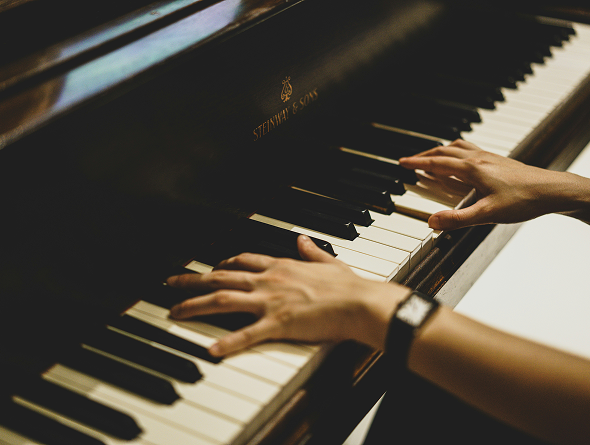
When choosing a music program, students and their families usually take into consideration other factors than just the location. What they are looking for are teachers who can make difficult ideas easy to understand, lessons that have a clear purpose, and a setting in which asking questions is normal.
The approach at Anselmo Academy of Music & The Arts emphasizes skill development alongside musical curiosity. Students can build fundamentals without being pushed into a one-size-fits-all program. That can be especially useful when students in the same family have very different abilities or interests.
When students are looking at the different options, they should think about the way in which lessons are organized, the way in which progress is made known, and whether the method of teaching can adjust as the student progresses.
You don’t need to have everything worked out before starting music lessons, and a student can begin with a spirit of curiosity and then find their own way as they go on.
If you are considering piano lessons in NJ for yourself or your child, learning more about the available programs is a practical first step. You can explore the academy, ask questions about instruction, and discuss what type of lesson structure may be appropriate.
When you are ready to take the next step, Contact us to learn more about getting started.