
One may start piano lessons for many reasons. A child may be curious after hearing someone play, while an adult might finally decide to learn the instrument they have always admired. Either way, the right teacher can make the process feel less intimidating and more rewarding. Our piano lessons in Westchester are designed around individual students, with instruction that builds technique, confidence, musical understanding, and overall enjoyment.
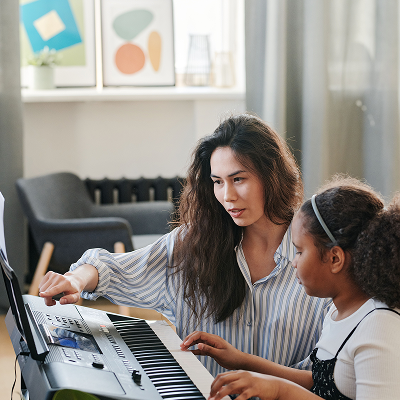
Children generally learn most effectively when the lessons are well organized but not too serious. A good piano lesson should give students something to work on while still leaving room for curiosity. In our piano lessons in Westchester, children develop their basic skills through age-appropriate teaching, supervised practice, and music they can relate to.
Early lessons include instruction in posture, hand position, rhythm, the notes, and basic reading. Once students have the hang of it, they can play complete pieces and start to understand how the music fits together. Each child’s progress varies, and that is completely normal.
Families looking for Piano Lessons for Kids can find instruction that supports both musical development and a positive relationship with the instrument.
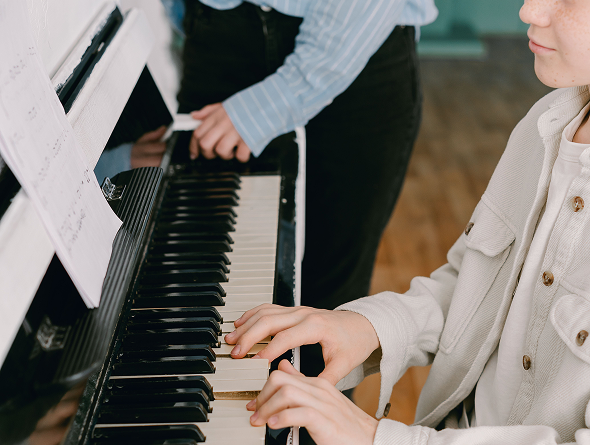
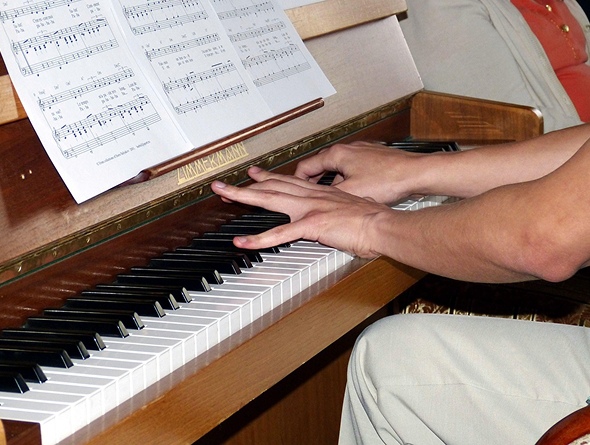
Some adults come in with hesitation, perhaps believing they are too old to begin, or recalling problems they had with music lessons as children. Adults, in reality, are able to learn efficiently when the lessons are designed around their needs and goals.
Our piano lessons in Westchester for adults can support complete beginners, returning players, and students who want to strengthen skills they already have. Some adults want to play classical repertoire. Others want to play contemporary songs, accompany themselves, or simply have a creative activity at the end of a busy week.
Adult instruction can also be practical. Lessons can focus on the areas that matter most rather than following a rigid sequence. Students can also explore Piano Lessons for Adults for a broader look at available instruction.
There is no single version of a successful piano student. One person may want to perform. Another may simply want to play a favorite song without stopping every few measures. Good teaching makes room for both.
Our piano lessons in Westchester County are adapted to age, experience, learning pace, and musical interests. Teachers can identify areas needing attention while building on skills already developing. That balance matters because lessons should challenge students without making every week feel like a test.
Beginners start with the fundamentals. This includes learning the keyboard layout, basic notation, rhythm, finger coordination, and healthy playing habits. These details may seem small, but they become important later.
Students also develop listening skills, noticing rhythm, pitch, dynamics, and phrasing instead of treating a piece as notes to memorize. For someone starting from zero, piano lessons in Westchester can provide structure that makes unfamiliar material manageable.
Intermediate students usually need a different kind of attention. They may already read music and play comfortably, but they may face challenges with technique, timing, musical interpretation, or consistency.
At this stage, lessons can introduce more demanding repertoire while strengthening existing skills. Students may work on scales, chords, sight reading, articulation, pedaling, and performance preparation. The goal is not simply to play harder pieces. It is to understand how to approach them.
Advanced players often benefit from detailed feedback. Small technical adjustments can affect tone, speed, control, and expression, so instruction becomes more individualized.
Advanced study may include challenging repertoire, performance preparation, interpretation, and refinement of technique. Students preparing for auditions or performances may also need focused practice strategies. The teacher can help identify what is holding a piece back and work through it methodically.
The most useful lesson plan fits the person sitting at the piano. A young beginner may need notation and rhythm. An adult returning after years away may need help rebuilding confidence. An experienced student may need targeted performance preparation.
That is why our piano lessons in Westchester, NY can be shaped around different goals instead of treating every student exactly the same. Lessons may emphasize classical training, contemporary repertoire, sight reading, technique, performance skills, or a mix of these areas.
The approach can change over time. A student who begins with a few songs may later become interested in more formal study. Lessons should have enough flexibility to grow with the student.

Technique provides the physical foundation for playing. Students learn posture, hand position, finger control, coordination, scales, chords, and other exercises appropriate to their level.
Technique should make playing easier. As control improves, students can approach faster passages, wider intervals, dynamics, and more complex patterns with greater confidence.

Understanding how music works can make new pieces less confusing. Students may study notes, intervals, scales, key signatures, rhythm, chords, and musical symbols as they become relevant.
Sight reading develops alongside theory. Rather than relying on memory, students learn to look ahead, recognize patterns, and respond to unfamiliar music.

Repertoire gives students something meaningful to work toward. Pieces are selected around the student’s level and interests.
Students learn dynamics, phrasing, articulation, tempo, and tone. A technically accurate performance can still sound flat, so they are encouraged to think about what they want the listener to hear.
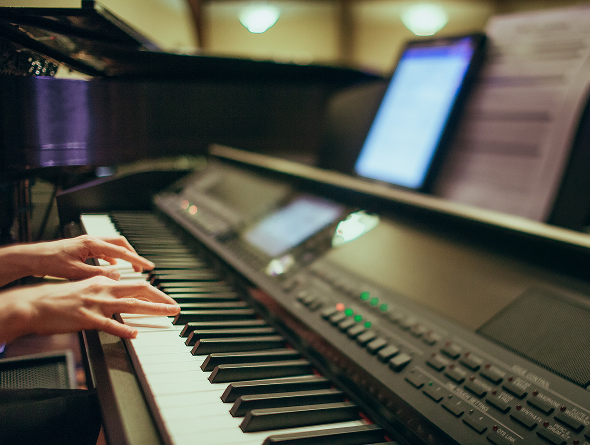
For families, consistency matters. So does finding a teacher who understands that children learn differently. Some need encouragement before they take risks. Others need clear structure and specific goals. Adults have their own demands on time and attention.
At Anselmo Academy, piano instruction focuses on building real musical skills while keeping lessons approachable. Students can work toward measurable progress without losing the enjoyment that made them want to learn in the first place.
For families comparing local options, practical questions are worth asking: Is the curriculum flexible? Are students encouraged to understand music rather than memorize it? Does the lesson environment make practice easier between sessions?
Visit the Anselmo Academy of Music & The Arts for information about programs and availability.
Starting piano does not require a student to know exactly where they want to end up. Sometimes the first step is simply seeing whether lessons feel like the right fit.
If you are exploring piano lessons in Westchester for a child, teenager, or adult, Contact us today to discuss a teaching approach that fits you.